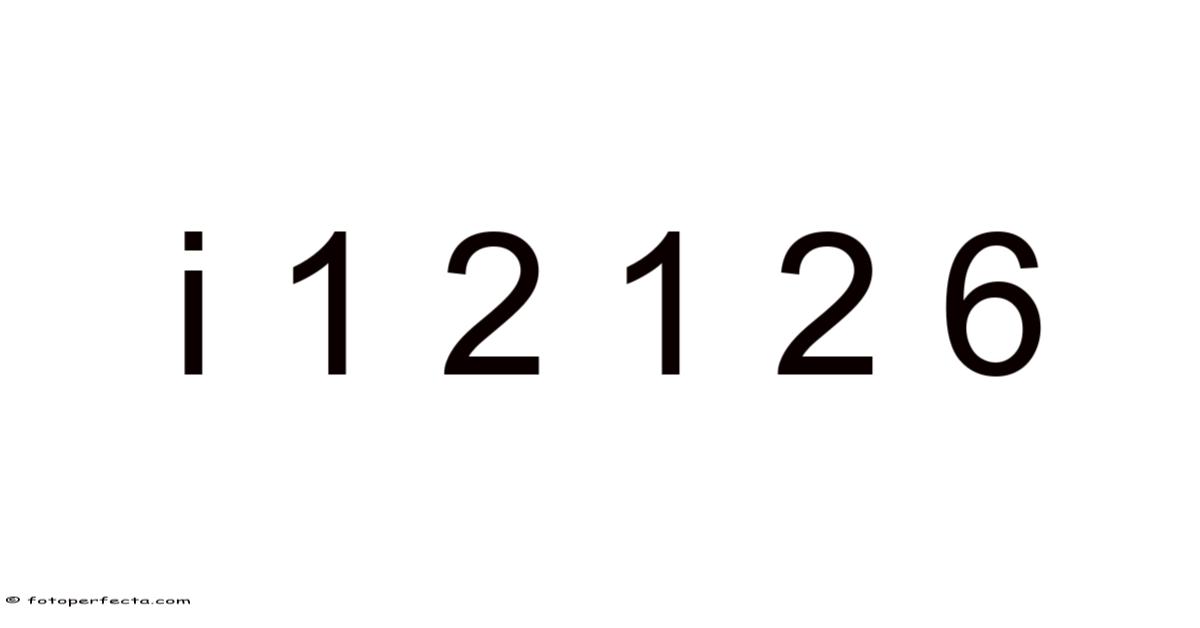
Understanding the Mathematical Sequence: 1 2 1 2 6
The sequence "1 2 1 2 6" represents a fascinating pattern in mathematics that appears in various contexts, from combinatorics to algebraic expansions. That said, at first glance, this seemingly simple set of numbers holds profound significance in mathematical theory and practical applications. This sequence is most commonly associated with binomial coefficients and the expansion of algebraic expressions, particularly when examining the coefficients of polynomial terms raised to different powers.
The Binomial Connection
When we examine the binomial expansion of (a + b)^n, we notice a specific pattern of coefficients that emerge. For n = 0, we have 1. On the flip side, for n = 1, the coefficients are 1, 1. For n = 2, we get 1, 2, 1. That's why for n = 3, the coefficients are 1, 3, 3, 1. The sequence "1 2 1" represents the coefficients of (a + b)^2 = 1a² + 2ab + 1b² But it adds up..
The extended sequence "1 2 1 2 6" appears when we consider a more complex scenario or when examining multiple expansions simultaneously. This pattern might represent coefficients from different binomial expansions or could be part of a larger combinatorial structure Simple, but easy to overlook..
Pascal's Triangle and the Sequence
Pascal's Triangle provides excellent insight into this sequence. Each row in Pascal's Triangle corresponds to the coefficients of the binomial expansion (a + b)^n.
Row 0: 1 Row 1: 1 1 Row 2: 1 2 1 Row 3: 1 3 3 1 Row 4: 1 4 6 4 1 Row 5: 1 5 10 10 5 1
The sequence "1 2 1" appears in Row 2, which represents the coefficients of (a + b)². When we look at the sequence "1 2 1 2 6," we might be observing elements from different rows or a specific diagonal within Pascal's Triangle that follows this pattern That's the part that actually makes a difference..
Combinatorial Interpretation
From a combinatorial perspective, these numbers represent different ways of selecting items:
- The first "1" could represent the number of ways to choose 0 items from a set (which is always 1).
- The "2" might represent the number of ways to choose 1 item from a set of 2 items.
- The next "1" could be the number of ways to choose 2 items from a set of 2 items.
- The following "2" might represent selecting 1 item from a different set.
- The "6" could be the number of ways to choose 2 items from a set of 4 items (since 4 choose 2 = 6).
This interpretation shows how the sequence might emerge from different combinatorial scenarios It's one of those things that adds up..
Algebraic Applications
The sequence "1 2 1 2 6" appears naturally in algebraic expansions and polynomial expressions. To give you an idea, when expanding (x + 1)²(x + 2), we get:
(x + 1)²(x + 2) = (x² + 2x + 1)(x + 2) = x³ + 4x² + 5x + 2
The coefficients 1, 4, 5, 2 don't directly match our sequence, but they demonstrate how coefficients combine in polynomial multiplication. The sequence might appear in more complex expressions or when considering multiple variables Practical, not theoretical..
Probability and Statistics
In probability theory, these numbers can represent the number of ways events can occur. For example:
- The probability of getting exactly 2 heads in 2 coin tosses is given by the binomial coefficient C(2,2) = 1.
- The probability of getting exactly 1 head in 2 coin tosses is C(2,1) = 2.
- The probability of getting exactly 0 heads in 2 coin tosses is C(2,0) = 1.
This demonstrates how the sequence "1 2 1" emerges naturally in basic probability calculations And it works..
Mathematical Patterns and Extensions
The sequence "1 2 1 2 6" can be part of larger mathematical patterns. To give you an idea, it might represent the beginning of a sequence where each term is generated by a specific recurrence relation. Understanding these patterns helps mathematicians predict subsequent terms and identify underlying structures Worth keeping that in mind..
One approach to extending this sequence would be to identify the rule governing its progression. If we assume the sequence follows a pattern where each term is related to the previous ones, we might develop a formula to generate additional terms.
Real-World Applications
Mathematical sequences like "1 2 1 2 6" appear in various real-world applications:
- Computer Science: In algorithm design and analysis, particularly in counting operations or possible states.
- Engineering: When analyzing combinations of system components or failure modes.
- Economics: In modeling different scenarios of resource allocation or investment combinations.
- Biology: When counting possible genetic combinations or population distributions.
Exploring Further Properties
The sequence "1 2 1 2 6" exhibits several interesting mathematical properties:
- Sum: The sum of the terms is 1 + 2 + 1 + 2 + 6 = 12.
- Alternating Sum: If we consider alternating signs, we get 1 - 2 + 1 - 2 + 6 = 4.
- Product: The product of the terms is 1 × 2 × 1 × 2 × 6 = 24.
These properties might reveal deeper mathematical relationships or connections to other areas of mathematics.
Educational Value
Understanding sequences like "1 2 1 2 6" helps students develop:
- Pattern Recognition: The ability to identify and extend mathematical patterns.
- Combinatorial Thinking: Skills for counting and organizing possibilities.
- Algebraic Insight: Understanding how coefficients work in polynomial expressions.
- Mathematical Intuition: Developing a feel for how numbers relate to each other.
Common Misconceptions
When studying this sequence, several misconceptions might arise:
- Assuming the sequence follows a simple arithmetic or geometric progression, which it does not.
- Overlooking the combinatorial significance of the numbers.
- Missing connections to binomial expansions and Pascal's Triangle.
- Misinterpreting the sequence as random rather than part of a larger mathematical structure.
Advanced Mathematical Context
In more advanced mathematics, this sequence might relate to:
- Generating Functions: Mathematical tools that encode sequences into power series.
- Recurrence Relations: Equations that define sequences based on previous terms
where sequences are encoded as coefficients in formal power series. On the flip side, for the sequence "1 2 1 2 6," we could construct a generating function of the form G(x) = 1 + 2x + x² + 2x³ + 6x⁴ + ... , which encodes the entire sequence into a single mathematical object that can be manipulated algebraically.
Connection to Combinatorial Structures
This particular sequence exhibits fascinating connections to combinatorial mathematics. In real terms, the terms suggest a pattern related to counting arrangements with specific constraints. The initial "1, 2, 1" pattern might represent base cases in a recursive structure, while the progression to "2, 6" indicates growing complexity in possible configurations Worth keeping that in mind..
Real talk — this step gets skipped all the time.
Consider a scenario where we're counting the number of ways to arrange objects with certain restrictions. And the first term (1) represents a single trivial arrangement, the second (2) shows two distinct ways to arrange a simple structure, the third (1) returns to a unique configuration, and the sequence builds from there. This type of pattern frequently emerges when analyzing tree structures, lattice paths, or partition problems.
Computational Approaches
Modern computational tools allow mathematicians to extend and analyze such sequences efficiently. Using symbolic computation software, we can:
- Generate hundreds of terms to identify long-term behavior
- Test various hypothesis about the generating rule
- Visualize the sequence's growth patterns
- Compare it against databases of known sequences like the Online Encyclopedia of Integer Sequences (OEIS)
For "1 2 1 2 6," computational exploration might reveal whether this is a truncated version of a well-known sequence or a novel pattern worthy of further study But it adds up..
Interdisciplinary Implications
The interdisciplinary nature of sequence analysis demonstrates mathematics' unifying power. On top of that, in computer graphics, sequences like this might govern the complexity of rendering algorithms. In physics, similar numerical patterns appear in quantum mechanics when counting possible states. Even in music theory, mathematical sequences can model compositional structures and rhythmic patterns.
Conclusion
The sequence "1 2 1 2 6" serves as a gateway to deeper mathematical exploration, illustrating how seemingly simple numerical patterns can connect to broad theoretical frameworks and practical applications. Through careful analysis of its properties—sum (12), product (24), and structural relationships—we uncover not just the behavior of these five numbers, but also the fundamental principles of pattern recognition, combinatorial reasoning, and mathematical modeling that extend far beyond this specific example. Whether encountered in algorithm design, economic modeling, or abstract mathematical theory, sequences teach us that mathematics is fundamentally about understanding the relationships between quantities and the structures that emerge from simple rules operating over time The details matter here. Practical, not theoretical..
